Granules From Your Shingles Collecting in the Gutters? What It Signals
August 21, 2026
Misdirected water is the root cause of more preventable structural damage than almost any other residential maintenance failure, and in a climate that delivers over 60 inches of rain per year, the margin for error in your gutter system is slim. Mobile's combination of tropical moisture, intense summer storms, and year-round rainfall means a gutter system that is borderline functional elsewhere becomes actively damaging here within a single wet season.
Top Flight Roofing
has spent more than 10
years inspecting, installing, and repairing gutter systems. We assess pitch, fascia condition, downspout placement, and system sizing on every inspection because those are the factors that determine whether your gutters protect your home or silently work against it. If your last heavy rain left you with questions about what your gutter system is actually doing, our
professional gutter installation services
provide the quality workmanship and dependable protection your home deserves.
You're clearing leaves out of the gutters after a summer storm, and your gloves come back gritty, coated in what looks like coarse black or gray sand. You dump the debris into a bucket and notice the bottom is lined with tiny stone-like particles that clearly didn't come from a tree. That gritty residue is granule loss, and if you're seeing it collect in any real volume, your roof is trying to tell you something.
Quick Answer.
A few granules in the gutters after a new roof is normal. Manufacturers add extra "rider granules" during production that shed off naturally in the months after installation. But if your roof is more than a few years old and you're finding handfuls of granules, or noticing bald, shiny patches on the shingles themselves, that's a different story. It usually means UV exposure, age, or storm impact has worn through the shingle's protective granule layer, which shortens the shingle's remaining service life and leaves the asphalt underneath exposed. A roof inspection is the fastest way to tell which situation you're in.
Misdirected water is the root cause of more preventable structural damage than almost any other residential maintenance failure, and in a climate that delivers over 60 inches of rain per year, the margin for error in your gutter system is slim. Mobile's combination of tropical moisture, intense summer storms, and year-round rainfall means a gutter system that is borderline functional elsewhere becomes actively damaging here within a single wet season.
Top Flight Roofing
has spent more than 10
years inspecting, installing, and repairing gutter systems. We assess pitch, fascia condition, downspout placement, and system sizing on every inspection because those are the factors that determine whether your gutters protect your home or silently work against it. If your last heavy rain left you with questions about what your gutter system is actually doing, our
professional gutter installation services
provide the quality workmanship and dependable protection your home deserves.
What Granules Actually Do
Every asphalt shingle is built in layers. A fiberglass mat forms the backbone, asphalt coats it to shed water and hold everything together, and mineral fillers get worked into that asphalt to add fire resistance and flexibility. The layer you actually see, the ceramic-coated crushed stone granules on the shingle's face, is doing more work than most homeowners realize.
UV Protection
Asphalt breaks down when it's left exposed to direct sunlight. Granules are what block that ultraviolet exposure from reaching the asphalt layer underneath. Once enough granules are gone, the asphalt starts drying out and losing flexibility faster than it should.
Fire And Impact Resistance
The granule layer contributes to a shingle's fire rating, and it absorbs some of the impact from hail and wind-blown debris before that force reaches the mat underneath.
Color And Heat Reflection
Granules give the shingle its color, and on many products they're formulated to reflect some solar heat, which helps keep attic temperatures down.
Take away the granules, and you're left with bare asphalt sitting under a Gulf Coast sun for months at a time. That's not a cosmetic problem. It's a countdown.
Misdirected water is the root cause of more preventable structural damage than almost any other residential maintenance failure, and in a climate that delivers over 60 inches of rain per year, the margin for error in your gutter system is slim. Mobile's combination of tropical moisture, intense summer storms, and year-round rainfall means a gutter system that is borderline functional elsewhere becomes actively damaging here within a single wet season.
Top Flight Roofing
has spent more than 10
years inspecting, installing, and repairing gutter systems. We assess pitch, fascia condition, downspout placement, and system sizing on every inspection because those are the factors that determine whether your gutters protect your home or silently work against it. If your last heavy rain left you with questions about what your gutter system is actually doing, our
professional gutter installation services
provide the quality workmanship and dependable protection your home deserves.
Some Granule Loss Is Normal, Especially on a New Roof
Here's what a lot of homeowners don't know: shingle manufacturers intentionally apply extra granules during production. Industry technical guidance on this is specific. Those surplus granules, sometimes called "rider granules," are there to make sure enough embed properly into the asphalt coating during manufacturing. The excess isn't meant to stay put forever.
That means a brand-new roof can shed a noticeable amount of loose granules in its first few rain events, and it's normal. That shedding is usually heaviest right after installation and tapers off over the following months as the surplus works its way free and the roof settles in. It's not a manufacturing defect, and it doesn't shorten the shingle's expected lifespan.
The distinction that matters is timing and volume. New-roof shedding fades. A roof that's several years old and still losing granules, or one that's losing them in growing amounts rather than less, is behaving differently, and that difference is what you need to pay attention to.
Tip: Keep a simple record. After a heavy rain, glance in the gutters and take a phone photo of what's collected. Do this two or three times over a few months. If the amount is dropping off, you're likely watching normal post-installation shedding run its course. If it's holding steady or increasing, that's worth a closer look.
Misdirected water is the root cause of more preventable structural damage than almost any other residential maintenance failure, and in a climate that delivers over 60 inches of rain per year, the margin for error in your gutter system is slim. Mobile's combination of tropical moisture, intense summer storms, and year-round rainfall means a gutter system that is borderline functional elsewhere becomes actively damaging here within a single wet season.
Top Flight Roofing
has spent more than 10
years inspecting, installing, and repairing gutter systems. We assess pitch, fascia condition, downspout placement, and system sizing on every inspection because those are the factors that determine whether your gutters protect your home or silently work against it. If your last heavy rain left you with questions about what your gutter system is actually doing, our
professional gutter installation services
provide the quality workmanship and dependable protection your home deserves.
What Excessive Granule Loss Signals on an Established Roof
If your roof has been up for several years and you're still finding a steady supply of granules in the gutters, a few things are typically behind it.
Age And UV Wear
Every shingle roof loses some granules gradually over its service life simply from years of sun, heat, and rain. On the Gulf Coast, where the sun is intense for most of the year and humidity keeps roofs consistently warm, that wear curve tends to run faster than it would in a milder climate. Granule loss that shows up as the roof approaches the back half of its expected lifespan is often a sign the shingles are aging out.
Storm And Hail Impact
Wind-driven rain, hail, and debris strikes can knock granules loose in a way that has nothing to do with age. A single strong storm can leave a roof that was performing fine suddenly shedding granules heavily, often concentrated around specific areas of the roof rather than spread evenly.
Foot Traffic Or Improper Installation
Walking on shingles more than necessary, especially in hot weather when the asphalt is softer, can dislodge granules. So can shingles that weren't nailed or sealed correctly, since those areas take more mechanical stress than they're designed for.
A Failing Shingle Nearing The End Of Its Life
As shingles age, the asphalt coating that holds the granules loses adhesion. Granules that were locked in place for years start letting go more easily, which is often one of the earliest visible signs that a shingle is reaching the end of what it can do.
Misdirected water is the root cause of more preventable structural damage than almost any other residential maintenance failure, and in a climate that delivers over 60 inches of rain per year, the margin for error in your gutter system is slim. Mobile's combination of tropical moisture, intense summer storms, and year-round rainfall means a gutter system that is borderline functional elsewhere becomes actively damaging here within a single wet season.
Top Flight Roofing
has spent more than 10
years inspecting, installing, and repairing gutter systems. We assess pitch, fascia condition, downspout placement, and system sizing on every inspection because those are the factors that determine whether your gutters protect your home or silently work against it. If your last heavy rain left you with questions about what your gutter system is actually doing, our
professional gutter installation services
provide the quality workmanship and dependable protection your home deserves.
What to Check When You Spot Granules in the Gutters
Before assuming the worst, walk the property and look for a few specific things.
Bald or Shiny Patches On The Shingles
From the ground, use binoculars or a zoomed-in phone camera to scan the roof for spots where the shingle color looks darker, shinier, or inconsistent compared to the rest of the field. That's exposed asphalt.
Where The Granules Are Concentrated
Granules pooling under one section of roof, rather than spread evenly across all the gutters, usually points to a localized problem: storm impact, a valley that sheds more water and debris, or a section with sun exposure different from the rest of the roof.
The Color Of The Debris
Black, tar-like grit mixed in with granules can mean the asphalt itself is starting to break down, not just the granule coating. That's a more advanced stage of wear.
Granule Buildup Inside The Gutters Themselves
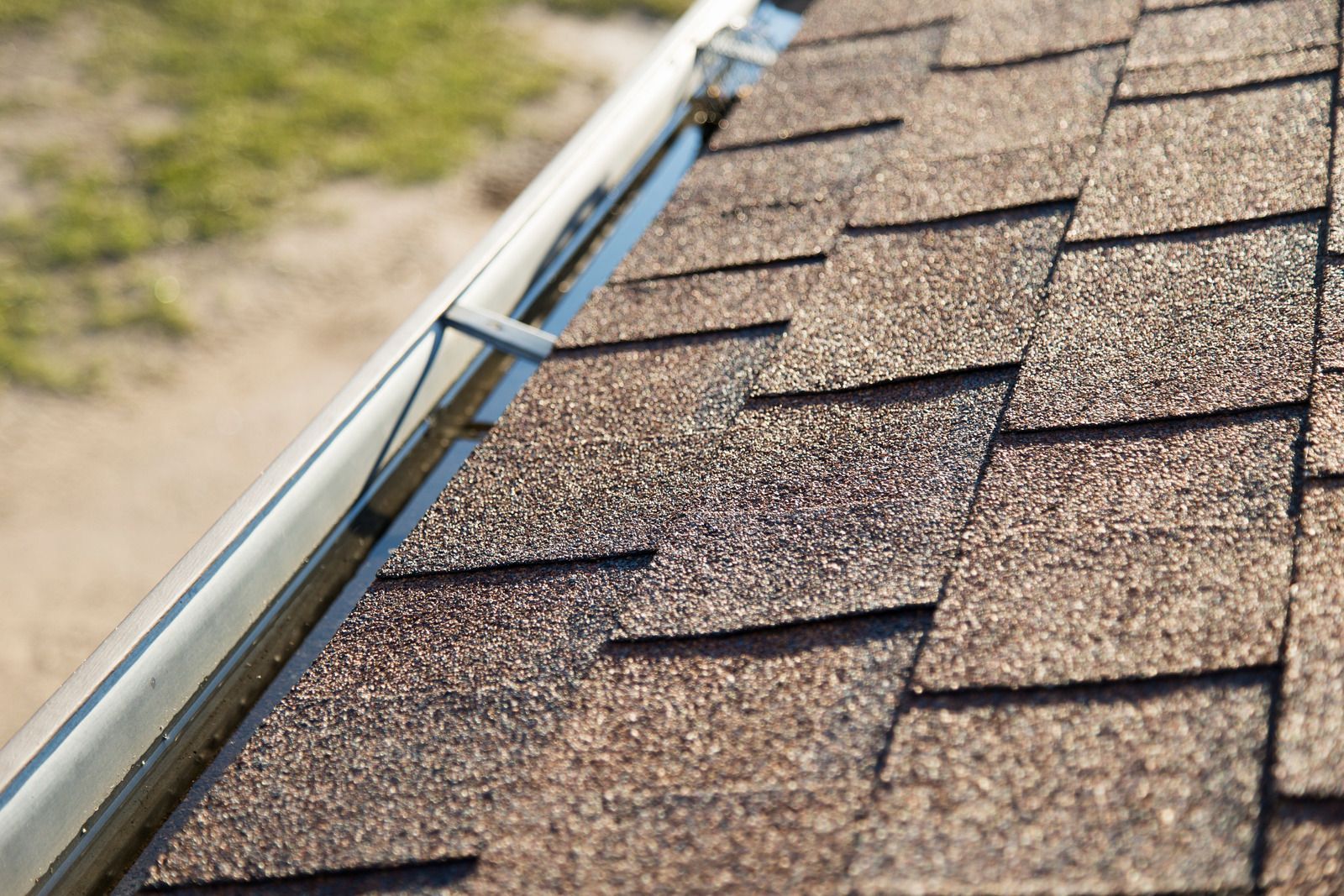
Beyond signaling roof condition, heavy granule accumulation can settle in the gutter channel and slow water flow, which compounds drainage problems separate from the roof issue.
Warning: If you're finding granules alongside soft spots on the roof deck, sagging areas, or any sign of an active leak inside the attic or on ceilings, don't wait on a routine inspection. Those combined signs point to deterioration that's already progressed past surface wear, and putting it off risks water reaching the structure underneath.
Misdirected water is the root cause of more preventable structural damage than almost any other residential maintenance failure, and in a climate that delivers over 60 inches of rain per year, the margin for error in your gutter system is slim. Mobile's combination of tropical moisture, intense summer storms, and year-round rainfall means a gutter system that is borderline functional elsewhere becomes actively damaging here within a single wet season.
Top Flight Roofing
has spent more than 10
years inspecting, installing, and repairing gutter systems. We assess pitch, fascia condition, downspout placement, and system sizing on every inspection because those are the factors that determine whether your gutters protect your home or silently work against it. If your last heavy rain left you with questions about what your gutter system is actually doing, our
professional gutter installation services
provide the quality workmanship and dependable protection your home deserves.
Inspection or Replacement: How to Know Which One You Need
Granule loss by itself doesn't automatically mean a full roof replacement. It's a symptom, and what it means depends on the shingle's age, how widespread the loss is, and what else is showing up alongside it.
When An Inspection Makes Sense
If the roof is younger, if the granule loss looks concentrated in one area rather than roof-wide, or if you're not sure whether what you're seeing is normal post-installation shedding, a professional inspection is the right next step. An experienced roofer can get on the roof, look closely at the shingle surface, check for bald spots and mat exposure, and tell you specifically what's driving the granule loss.
When It Points Toward A Bigger Conversation
If the roof is already well into its expected service life, if granule loss is spread across most of the roof rather than isolated, or if you're seeing curling, cracking, or brittle shingles alongside the granule loss, those are signs the roofing system as a whole is aging out rather than dealing with one isolated issue.
The value of catching this early comes down to scale: a shingle that's lost its granule layer in one section is a much smaller repair than a roof deck that's been absorbing water because nobody caught the wear in time.
Misdirected water is the root cause of more preventable structural damage than almost any other residential maintenance failure, and in a climate that delivers over 60 inches of rain per year, the margin for error in your gutter system is slim. Mobile's combination of tropical moisture, intense summer storms, and year-round rainfall means a gutter system that is borderline functional elsewhere becomes actively damaging here within a single wet season.
Top Flight Roofing
has spent more than 10
years inspecting, installing, and repairing gutter systems. We assess pitch, fascia condition, downspout placement, and system sizing on every inspection because those are the factors that determine whether your gutters protect your home or silently work against it. If your last heavy rain left you with questions about what your gutter system is actually doing, our
professional gutter installation services
provide the quality workmanship and dependable protection your home deserves.
Why This Matters More on the Gulf Coast
Roofs around Mobile deal with a combination that's harder on granules than most inland climates see: long stretches of intense sun, high humidity that keeps materials warm even overnight, and regular exposure to wind-driven rain and storm systems. That combination accelerates the natural wear cycle that eventually loosens granules from the asphalt coating. It's part of why routine seasonal inspections, especially before and after storm season, catch problems here that might go unnoticed longer in a drier, cooler region.
Misdirected water is the root cause of more preventable structural damage than almost any other residential maintenance failure, and in a climate that delivers over 60 inches of rain per year, the margin for error in your gutter system is slim. Mobile's combination of tropical moisture, intense summer storms, and year-round rainfall means a gutter system that is borderline functional elsewhere becomes actively damaging here within a single wet season.
Top Flight Roofing
has spent more than 10
years inspecting, installing, and repairing gutter systems. We assess pitch, fascia condition, downspout placement, and system sizing on every inspection because those are the factors that determine whether your gutters protect your home or silently work against it. If your last heavy rain left you with questions about what your gutter system is actually doing, our
professional gutter installation services
provide the quality workmanship and dependable protection your home deserves.
Frequently Asked Questions
Is it normal to see granules in the gutters after a new roof installation?
Yes. Manufacturers apply extra granules during production to ensure proper embedment, and that surplus sheds off naturally in the months following installation. This shedding is heaviest right after the roof goes on and tapers off over time. It's not a sign of a defective roof.
How much granule loss is too much?
There's no fixed number, since it depends on the roof's age and shingle type. The pattern matters more than any single count: shedding that's decreasing over the first several months after installation is normal, while shedding that continues steadily or increases on an established roof is worth having looked at.
Can I tell if granule loss is from age or from a recent storm?
Often, yes. Storm-related loss tends to show up suddenly and concentrated in specific areas, sometimes alongside dents, bruising, or debris strikes visible on the shingle surface. Age-related loss tends to be gradual and spread more evenly across the roof.
Does losing granules mean the shingles will start leaking soon?
Not immediately. Granule loss exposes the asphalt layer to more UV and weather stress, which accelerates aging and brittleness over time. It's a warning sign about the shingle's remaining service life rather than an indicator of an active leak, though a shingle that's lost enough granules is more likely to develop problems down the road.
Should I clean granules out of my gutters if I find them?
Yes, gutters should still be cleared regularly regardless of what's causing the debris. A heavy layer of granules sitting in the gutter channel can slow water flow just like leaves or dirt would, adding a drainage issue on top of whatever is happening on the roof.
Do commercial roofs shed granules the same way residential shingle roofs do?
Granule-surfaced membranes used on some commercial systems can shed granules in a similar way, particularly on modified bitumen or granule-cap systems. The underlying causes, sun exposure, age, and physical impact, are largely the same, though the inspection points differ from a shingle roof.
Can granule loss happen only in certain spots on the roof?
Yes, and that's actually a useful diagnostic clue. Granule loss concentrated in valleys, around vents, or on one particular slope usually points to a localized cause, like water concentration, foot traffic, or a section that takes more direct sun, rather than roof-wide aging.
What should I do if I'm not sure whether what I'm seeing is normal?
The most reliable way to know is to have someone get eyes on the actual shingle surface rather than guessing from the ground. A close inspection can tell the difference between leftover manufacturing granules and a shingle that's actually losing its protective coating.
Misdirected water is the root cause of more preventable structural damage than almost any other residential maintenance failure, and in a climate that delivers over 60 inches of rain per year, the margin for error in your gutter system is slim. Mobile's combination of tropical moisture, intense summer storms, and year-round rainfall means a gutter system that is borderline functional elsewhere becomes actively damaging here within a single wet season.
Top Flight Roofing
has spent more than 10
years inspecting, installing, and repairing gutter systems. We assess pitch, fascia condition, downspout placement, and system sizing on every inspection because those are the factors that determine whether your gutters protect your home or silently work against it. If your last heavy rain left you with questions about what your gutter system is actually doing, our
professional gutter installation services
provide the quality workmanship and dependable protection your home deserves.
Understanding Granule Loss Before Problems Grow
Granule loss does not always mean a roof is failing, but its timing, volume, and location can reveal how well shingles are holding up. New roofs may shed excess granules naturally, while older roofs with persistent buildup, bald areas, cracking, or exposed asphalt deserve closer attention. Recognizing these differences helps property owners understand whether they are seeing routine shedding, localized storm damage, or gradual deterioration caused by years of sun, heat, rain, and weather exposure.
For homeowners in Mobile, AL, regular awareness is especially valuable because Gulf Coast conditions can accelerate shingle wear. With 10+ years of experience, Top Flight Roofing
understands how prolonged sunlight, humidity, heavy rain, and storms affect roofing materials over time. Watching for changes in gutter debris and visible shingle surfaces can provide an early indication of developing wear, helping prevent minor deterioration from progressing unnoticed into more extensive roofing or structural concerns later on.